- Ian : Haiti That country needs lots of help and it getting enoughsince the earthquake. It really is a poor country.
- Juan: Japan So many tragic things has happened to Japan that they should finally recieve some help.
- Jalimar: Sudan It is shocking to me to see these people are able to suffer so much and other countries not doing anything about it.
- Yvette: Tibet it should be its own country and not China's property.
- Geordaliz: Bangladesh This country needs a lot of help... PERIOD!
- Anluishgie: Indonesia This country is being abused by the people who are suppose to be protecting them.
- Paola C.: Somalia This country needs more recognition to get the help that they deserve.
- Wilson: Afganistan This country has a lot of issues concerning its people's right and they should be helped.
- Hector: Eygpt They should have help after their recent revolution and showing the world that rights do matter.
- Giovanni: Cuba They should recieve help for a government and equality that the people want.
Sunday, May 1, 2011
Top 10

My Proposal
My proposal for Colombia includes a couple of things. Firstly, I think they need a better and stronger goverment, a stricter and more united one. Next, they need every once of military support that they can recieve, to beat the gangs and drug traficking in that country. They need a stronger police system to ensure and to protect their people. Lastly, they need refugee assisstance, lots of Colombians have left their homeland and many don't have a place to go.
Phase One: Better Government
A stricter and a more united government means more laws and restriction. The government should find a new way to make money for their people instead of coca leaf plantation. Over time they should start to take away less and less land where the drug is being planted and using it for farming or or anythingelse useful for giving back to the people. They should instill laws that protect the frequently targeted people by the gangs and do everything in their power to make them feel protected and ensure them that they have rights. The fued between the Conservative and Liberal parties should stop because it is not making the current situation in Colombia better, it just making things worse by making the people chose sides and practically hating each other for it.
Phase Two: Military Support and Better Police
Colombia is the largest drug producer in the world. Contol has to be regained there, it seems has if the gangs and drug trafficking controls the country, that has to stop. Other countries with a strong military should pitch in and see if those gangs can be brought down and see if those countries can also lend some space to put those leaders and the bigger threats to the citizens. Colombia should also solidify their police system. Too many crimes are getting away and justice should be served, they should retrain old officers and try to recruit new officers who know will do their job. Other countries should see if some of their people could move to Colombia and work for the police because I think that Colombia is a big country and should have more police to cover more the terrain.
Phase Three: Refugee Assistance
In recent years alot of Colombians has left their homeland. This could be many reasons but probably the most obvious reason why is because they are scared and they are tired of living like that constat terror of gangs and drugs and fighting. Other countries should help the people who want to leave to have a better furtues for them and their families. It doesn't mean that those countries are going to allow for Colombians to over populate that place, it juat means that they should work on quantities of how many refugees enter.
Phase One: Better Government
A stricter and a more united government means more laws and restriction. The government should find a new way to make money for their people instead of coca leaf plantation. Over time they should start to take away less and less land where the drug is being planted and using it for farming or or anythingelse useful for giving back to the people. They should instill laws that protect the frequently targeted people by the gangs and do everything in their power to make them feel protected and ensure them that they have rights. The fued between the Conservative and Liberal parties should stop because it is not making the current situation in Colombia better, it just making things worse by making the people chose sides and practically hating each other for it.
Phase Two: Military Support and Better Police
Colombia is the largest drug producer in the world. Contol has to be regained there, it seems has if the gangs and drug trafficking controls the country, that has to stop. Other countries with a strong military should pitch in and see if those gangs can be brought down and see if those countries can also lend some space to put those leaders and the bigger threats to the citizens. Colombia should also solidify their police system. Too many crimes are getting away and justice should be served, they should retrain old officers and try to recruit new officers who know will do their job. Other countries should see if some of their people could move to Colombia and work for the police because I think that Colombia is a big country and should have more police to cover more the terrain.
Phase Three: Refugee Assistance
In recent years alot of Colombians has left their homeland. This could be many reasons but probably the most obvious reason why is because they are scared and they are tired of living like that constat terror of gangs and drugs and fighting. Other countries should help the people who want to leave to have a better furtues for them and their families. It doesn't mean that those countries are going to allow for Colombians to over populate that place, it juat means that they should work on quantities of how many refugees enter.
Saturday, April 30, 2011
Issues with Human Rights
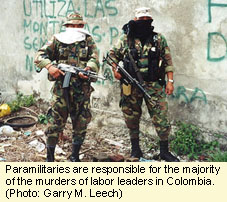
Colombia is a constitutional,multiparty democracy with a population of about 45 million. In recent years there has been a frequency of human rights issues in this country that are vastly effecting its people. There has been a 46 year internal battle between the government and terrorist organizations like the FARC ( Revolutionary Armed Forces of Colombia) and Eln or the National Liberation Army. These groups thave commited the following human rights abuses: political killings; killings of members of the public security forces and local officials; widespread use of landmines; kidnappings and forced disappearances; massive forced displacements; subornation and intimidation of judges, prosecutors, and witnesses; infringement on citizens' privacy rights; restrictions on freedom of movement; widespread recruitment and use of child soldiers; attacks against human rights activists; violence against women, including rape and forced abortions; and harassment, intimidation, and killings of teachers and trade unionists. New illegal armed groups or gangs has been reported to be increasing and have been labeled as the emerging criminal bands, or BACRIM. In Feburary 2010, a Human Rights Watch report was released and stated the emergence of smaller criminal gangs followed the increase in internal displacement in Colombia from 2004 to 2007.
The following societal problems and governmental human rights abuses were reported during the year due to the growth of successor groups: unlawful and extrajudicial killings; insubordinate military collaboration with new illegal armed groups and paramilitary members who refused to demobilize; forced disappearances; torture and mistreatment of detainees; overcrowded and insecure prisons; arbitrary detentions; impunity and an inefficient judiciary subject to intimidation; illegal surveillance of civilian groups, political opponents, and government agencies; occasional harassment and intimidation of journalists; unhygienic conditions at settlements for displaced persons, with limited access to health care, education, or employment; corruption; harassment of human rights groups and activists, including unfounded prosecutions; violence against women, including rape; violence against Lesbian, Gay, Bisexual and Transgender (LGBT) persons based on sexual orientation; child abuse and child prostitution; trafficking in women and children for the purpose of sexual exploitation; some societal discrimination against women, indigenous persons, and Afro-Colombians; and illegal child labor. They frequently threaten and attack human rights defenders, trade unionists, jouranlists, and victims of the AUC (United Self-Defense Forces of Colombia) who want justice or restitution of land.
For example, one human rights defender described how, while she was providing assistance to a victim of the AUC at the victim’s home, members of a successor group calling themselves the Black Eagles broke into the house, raped both women, and warned her to stop doing human rights work.“They told me it was forbidden for me to do that in the municipality. They didn’t want victims to know their rights or report abuses,”she told us.When she continued her work, they kidnapped her and said that if she did not leave town, they would go after her family. She sought help from local authorities, who dismissed her saying she should have known better than to do human rights work, and so she eventually fled and went into hiding.
The importance of these problems that are occuring is that many people have fled their homes due to these gangs and many more live in fear of them. Many people has been taken away their right to equality, a good education, brotherhood,nationality, and living without discrimination. Other has been taken away the right to live, and living without torture or punishment. Most importantly it seems that a lot of people have lost the right to freedom of opinion, thought,and expression. That means that everyone should have the right to freedom to hold opinion swithout interference and to seek, recieve, and impart information and ideas through any media and regardless of frontiers.
 |
| Child Soldier in the FARC |
For example, one human rights defender described how, while she was providing assistance to a victim of the AUC at the victim’s home, members of a successor group calling themselves the Black Eagles broke into the house, raped both women, and warned her to stop doing human rights work.“They told me it was forbidden for me to do that in the municipality. They didn’t want victims to know their rights or report abuses,”she told us.When she continued her work, they kidnapped her and said that if she did not leave town, they would go after her family. She sought help from local authorities, who dismissed her saying she should have known better than to do human rights work, and so she eventually fled and went into hiding.
The importance of these problems that are occuring is that many people have fled their homes due to these gangs and many more live in fear of them. Many people has been taken away their right to equality, a good education, brotherhood,nationality, and living without discrimination. Other has been taken away the right to live, and living without torture or punishment. Most importantly it seems that a lot of people have lost the right to freedom of opinion, thought,and expression. That means that everyone should have the right to freedom to hold opinion swithout interference and to seek, recieve, and impart information and ideas through any media and regardless of frontiers.
Resources:
Friday, April 29, 2011
Colombia's Past
Colombia has had many fights in the past to be where they are now. It said that Colombia was inhabitated by many Amerindian groups as early as 11,000 B.C. The first Spanish settlements dates from 1525. In 1528, a conquistador named Gonzalo Jimenez de Quesada conquered the inhabitants- the Chibchas- and established Bogotá. It then became a colony called New Granada, which consisted of the now countries of Venezuela, Colombia, and Ecuador, and it became a viceroyalty.
In the late 1700s a separatist was developed and in July 20,1810 independence was declared but not official until August 7, 1819 when Simón Bolivar won the Battle of Boyacá. Bolívar then overthrew the viceroyalty and created the Republic of Gran Colombia and it originally included Colombia, Venezuela, Ecuador,and Panama but, lost Venezuela and Ecuador to separatists and it was then named the State of New Granada. Fransico de Paula Santander served as vice president but then served as president between 1832 and 1836 and there was some problems over power between the church and government and in 1840 a civil war broke out. In between 1861 and 1885 the country's name was changed three times and it stayed with the Republic of Colombia. A brutal civil war broke out claming more than 100,000 deaths was known as the War of a Thousand Deaths (1899-1902). In 1903, Panama declared independance.
The Conservative presidents held power from 1909 'til 1930, then revolutionary pressure put the Liberals back in power until 1942, during that time, the WWII intensified the political divisions within the country. The postwar period caused growing social unrest and riots in the capital, politics became more violent after the assassination of the populist leader of the liberal party, Jorge Eliécer Gaitán, that led to a riot called "El Bogotazo", 1,500 peolple died and 20,000 were injured. A civil war broke out between the Conservative and Liberal parties (consequence of Gaitán's assassination) called La Violencia. It expanded over 10 years and an estimate of 200,000 people died. It convinced Colombians, at that time, that the ongoing rivalry beteen the two parties needs to be brought under control. In 1953, General Gustavo Rojas Pinilla took over the government but as a dictator.
Rojas could not conquer the ongoing violence in the country, so he gave up power in May 1957 to a millitary junta, which provided free elections. Over the years the Conservative and Liberal Parties have made a pact in which there would be free elections and taking turns in presidency. In 1983, there was an estimated of 6,000 leftist guerrillas were active in Colombia. In July 5,1991 a new constitution was created by César Gaviria Trujillo in which included a number of reforms that aimed to increase the democratization of the political system. By 1996, there was guerrilla presence in over half the country and an estimated 1,000,000 Colombians fled their homes between 1987 and 1996 because there was no apperant prospect of which guerrilla groups that would take over the country. In 1980s Colombian drug traffickers controlled 80% of the wold's cocaine trade.
In 2000, a multimillion dollar initiative that was funded by the US government, Plan Colombia, aimed to combat drug production and loosen its heavy focus on the military and put that focus on economic incentives that could lead peasants to abandon the coca leaf plantation.Former Defense Minister Juan Manuel Santos handily won the second round of presidential elections in June 2010. He promised to maintain the policies of former president Uribe, including the campaign against FARC guerrillas and forging a close relationship with the United States. Santos was largely responsible for planning and carrying out the government's successful assault on FARC.

In the late 1700s a separatist was developed and in July 20,1810 independence was declared but not official until August 7, 1819 when Simón Bolivar won the Battle of Boyacá. Bolívar then overthrew the viceroyalty and created the Republic of Gran Colombia and it originally included Colombia, Venezuela, Ecuador,and Panama but, lost Venezuela and Ecuador to separatists and it was then named the State of New Granada. Fransico de Paula Santander served as vice president but then served as president between 1832 and 1836 and there was some problems over power between the church and government and in 1840 a civil war broke out. In between 1861 and 1885 the country's name was changed three times and it stayed with the Republic of Colombia. A brutal civil war broke out claming more than 100,000 deaths was known as the War of a Thousand Deaths (1899-1902). In 1903, Panama declared independance.
The Conservative presidents held power from 1909 'til 1930, then revolutionary pressure put the Liberals back in power until 1942, during that time, the WWII intensified the political divisions within the country. The postwar period caused growing social unrest and riots in the capital, politics became more violent after the assassination of the populist leader of the liberal party, Jorge Eliécer Gaitán, that led to a riot called "El Bogotazo", 1,500 peolple died and 20,000 were injured. A civil war broke out between the Conservative and Liberal parties (consequence of Gaitán's assassination) called La Violencia. It expanded over 10 years and an estimate of 200,000 people died. It convinced Colombians, at that time, that the ongoing rivalry beteen the two parties needs to be brought under control. In 1953, General Gustavo Rojas Pinilla took over the government but as a dictator.
Rojas could not conquer the ongoing violence in the country, so he gave up power in May 1957 to a millitary junta, which provided free elections. Over the years the Conservative and Liberal Parties have made a pact in which there would be free elections and taking turns in presidency. In 1983, there was an estimated of 6,000 leftist guerrillas were active in Colombia. In July 5,1991 a new constitution was created by César Gaviria Trujillo in which included a number of reforms that aimed to increase the democratization of the political system. By 1996, there was guerrilla presence in over half the country and an estimated 1,000,000 Colombians fled their homes between 1987 and 1996 because there was no apperant prospect of which guerrilla groups that would take over the country. In 1980s Colombian drug traffickers controlled 80% of the wold's cocaine trade.
In 2000, a multimillion dollar initiative that was funded by the US government, Plan Colombia, aimed to combat drug production and loosen its heavy focus on the military and put that focus on economic incentives that could lead peasants to abandon the coca leaf plantation.Former Defense Minister Juan Manuel Santos handily won the second round of presidential elections in June 2010. He promised to maintain the policies of former president Uribe, including the campaign against FARC guerrillas and forging a close relationship with the United States. Santos was largely responsible for planning and carrying out the government's successful assault on FARC.
Resources:
Friday, April 22, 2011
Food, Color and Celebration.

The religion is dominated by the Roman Catholic which influences largely the culture and multicultural society even though the presences of other beliefs.
Art is beautiful, and most of the times it can highly influence a culture. Colombia is no exception. Its art ranges in sculptures and paintings from acient times to present day. It has produced artists like Alejandro Obregon, Fernando Botero, and Omar Rayo.
Music and dance is very important in every culture, it makes you who you are and shows pride and love for your culture. Colombian music contains a vast variety of styles like Cumbia, Champeta, Abozao, Juga, Pilon, Porro, Seis, Socca and Tambora which are all genres that originated in Colombia. Salsa is another popular genre even though it comes from Puerto Rico and Cuba. Vallenato is their native dance and is very colorful.
Colombian food is very mixed and unique in their culture. It consist a mixture of Spanish, French, and Italian. Popular dishes vary in different regions but some popular dishes are Fritanga and Calentado.
Carnivals and festivals are a big part in the Colombian culture. Most of them are religious like Pastos, Holy Week, and Chistmas. Other important festives include: the Cali fair and the Flower fair.
Sources:
Wednesday, April 6, 2011
Country Overview

Location: Colombia is located in Northern South America, bordering the Carribean Sea,and in between Panama and Venezuela. It also borders the North Pacific Ocean, between Ecuador and Panama.
Geography: It is less than twice the size of Texas! Its climate is tropical along the coastlines and eastern plains, but has a cooler climate in highlands. Its terrain consist of flat coastal lowlands, central highlands, high Andes Mountains, and eastern lowland plains.
Population: In July 2011 there was reportedly 44,725,543 people.
Birth Rates: Are currently at 17.49/1,000.
Death Rates: Are currently at 5.26/1,000.
Life Expectancy: Are currently at a total of about 75 years, but for males it is about 71 years and for females about 78 years.
Ethnic Group(s): They are currently at mestizos,58%;white,20%;mulatto,14%; black,4%; Amerindian,1%; black-Amerindian,3%.
Education: It is free but only compulsory for five years.
Literacy Rates: (age 15 and over that can read and write). Its total is an estimate of 90.4%. For males it is 90.1% and for females 90.7%.
Languages: Their official language is spanish.
Religion: Their main religion is Roman Catholic with 90% and other religion just hold 10% of the population.
Current Government Type: It is currently a Republic.
Political State: The president, President Juan Manuel Santos Calderon, is both the chief of state and head of government. The president and vice president are elected by popular vote for a four-year term. Juan Manuel Santos Calderon obtained 69.09% of votes. Also, there are 7 political parties.
Legal System: It is based on Spanish law. In 2004, a new criminal code was modeled after US procedures and intacted. In 2008, the new law reached full implementation.
Suffrage: (voting rights) It is universal, 18 years of age.
Unempolyment Rate: it is currently at 11.8%.
Population below Poverty: It is currently at 45.5% of the population.
Industries: They include textiles, processing food, oil, clothing and footwear, beverages, chemicals, cement, gold, coal,emerlads. The industry growth is at 5.5%.
Communications: There are 7.5 million main line telephone users, 42.16 million mobile cellular users, and 22.54 million internet users. The brocasting media is a combination state-owned and privately-owned service. It contains more than 500 radio stations and a large number of national, regional, and local TV stations.
Military Service: The branches include the National Army, National Navy and Colombian Air Force. Compulsory and voluntary military service are between the ages of 18-24 and service obligation are 18 months.
Transnational Issues: Some international disputes are that in December 2007, the International Court of Justice gave the islands of San Andres, Providencia, and Santa Catalina to Colmbia under the 1928 Treaty with Nicaragua. Another dispute is with Venezuela, and it is over a maritime boundary and Venezuelan-adminstered Los Monjes Islands near the Gulf of Venzuela. There are also Colombian-organized narcotics, guerrilla, and paramilitary activites penetrating all neighboring borders have caused Colombians to flee to neighboring countries. A really big problem is illicit drugs like coca, opium poppy, and cannbis. It is the world leading and largest producer and cultivator of coca and most Colombian heroin is destined for the US market.
LINKS:
CIA World Factbook
Colombia Education Information
Subscribe to:
Posts (Atom)